
Reconfiguring the nerves is what ends the struggle with erectile dysfunction – but only if it is done correctly.
Well-being > Sexual Health > Science
Neurologists agree: This 15-minute neurological routine is “reprogramming” healthy, long-lasting erections.
Dr Alex Turner, Clinical Neuroscientist
13 January 2026 | Reading time: 5 minutes

In recent months, our editorial office has been inundated with reports from men who have regained firm erections using a little-known neurological technique — one that has been completely ignored by the pharmaceutical industry.
The trigger?
A simple method of neural re-education, validated by neuroscience studies, which acts directly on the nervous system responsible for erections.
To investigate, we contacted two independent experts:
Dr. Max Renner, a neurologist specialising in male neural recovery
Dr. Lila Hartmann, a clinical psychologist focusing on sexual anxiety and performance blocks
“Erectile dysfunction has reached epidemic levels. And the mistake is to treat it as a blood problem, when in most cases it is a nerve signal problem,”
says Dr. Renner.
“Anxiety, stress, and mental overload shut down the arousal circuit. The man wants to... but his body doesn't respond,”
adds Dr Hartmann.
3 neurological truths that explain why the penis fails — even with desire
TRUTH #1 — Erection is an electrical event, not just a vascular one

Each sexual stimulus must travel from the brain to the penis via electrical impulses measured in Hertz.
If this signal arrives weak, delayed, or disorganised…
the erection does not happen — or is not sustained.
“The penis does not fail. The command fails,’”
explains Dr. Renner.
TRUTH #2 — Stress and sexual anxiety DESYNCHRONISE this signal

Excessive pornography, pressure to perform, fear of failure, social media, and daily stress disrupt the natural frequency of the sexual nervous system.
The result is familiar to millions of men:
- Weak erection
- Loss of rigidity during sex
- Failure just when it’s time for sex.
And this cannot be solved with willpower alone.
TRUTH #3 — Medications do not correct the nerve signal.

Viagra, Cialis, and similar drugs only force blood flow.
They do not re-educate the brain,
restore nerve connections,
or address the real cause.
“It's like trying to fix a broken remote by replacing the television,”
says Renner.
The only real way to restore an erection is to recalibrate the neurological circuit.
The technology that is reprogramming the male brain

Studies in neurostimulation show that specific electrical frequencies can reactivate areas of the brain linked to arousal, sexual focus, and penile response.
This technique has been used for years in neurological clinics —
but now it is accessible at home.
The most effective method identified is targeted neuromuscular stimulation, which sends precise impulses to the peripheral nervous system responsible for erection.
“When the correct frequency is applied, the brain recognises sexual stimuli as it should again,”
says Dr Renner.
ErectoNeuroX was developed precisely for this purpose:
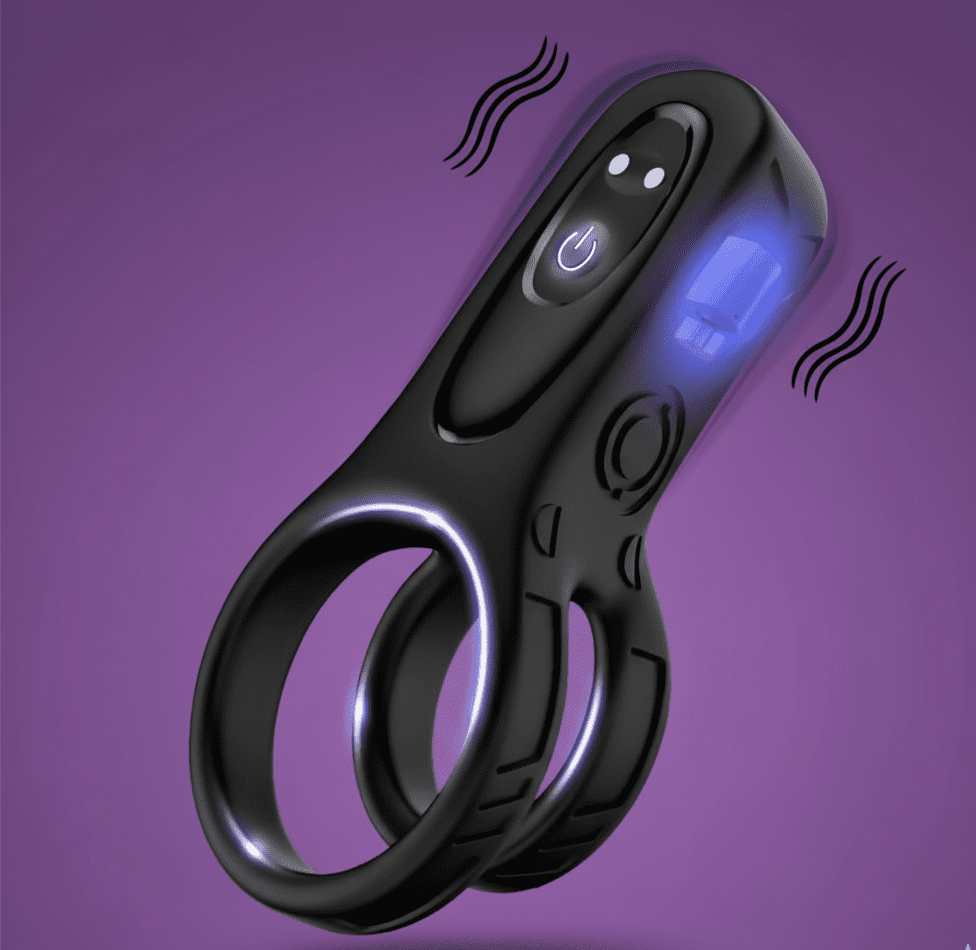
✔ Emit neuromodulated electrical impulses
✔ Reactivate brain-penis communication
✔ Reduce blockages caused by stress and anxiety
✔ Restore NATURAL erectile response, without drugs
Sessions last between 10 and 15 minutes.
No pain.
No side effects.
No chemical dependency.
Results observed by users
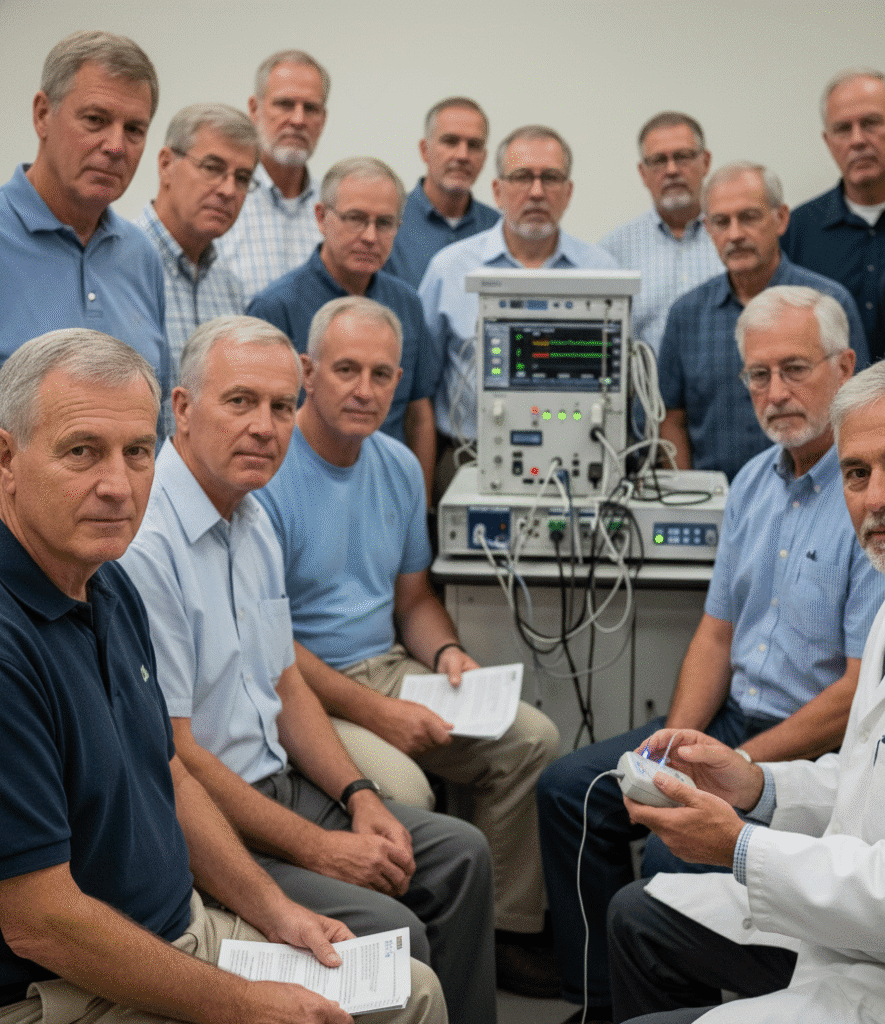
According to internal usage data:
- 93% reported firmer erections in the first few weeks
- 87% noticed improvement in control and duration
- 91% felt reduced sexual anxiety
And most importantly:
confidence returned.
Why this does NOT work with YouTube videos or ‘workarounds’
Generic videos, random stimuli, or ‘magic frequencies’ from the internet:
✘ Are not calibrated
✘ Do not target the correct nerve
✘ Do not maintain electrical synchronisation
ErectoNeuroX is designed to deliver precise stimulation with real neurological protocols — not entertainment.
How it works in practice
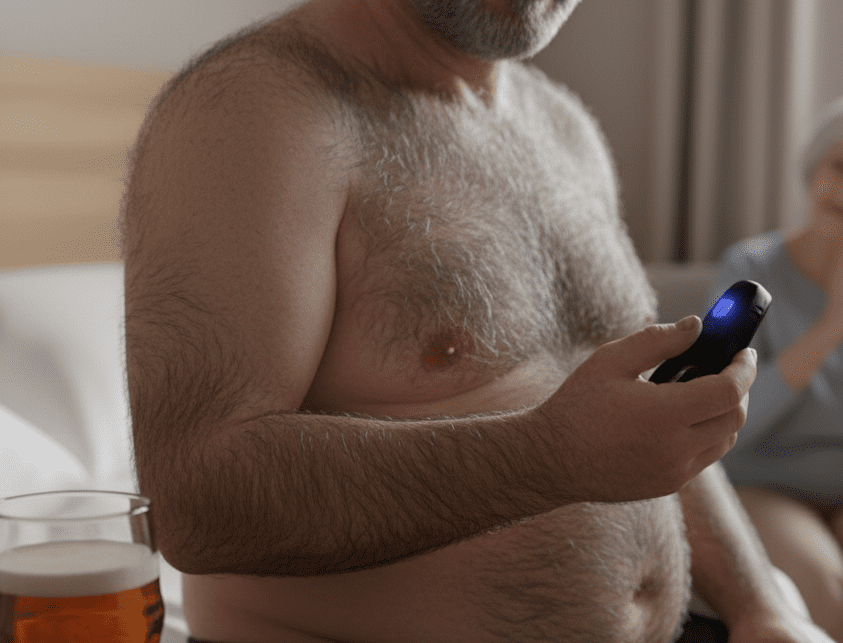
1️⃣ You use ErectoNeuroX for a few minutes on your penis.
2️⃣ The device sends targeted neuromuscular impulses.
3️⃣ The sexual nervous system begins to reorganise itself.
4️⃣ The erectile response returns naturally.
No medication.
No embarrassment.
No dependence on artificial stimuli.
Total zero-risk guarantee
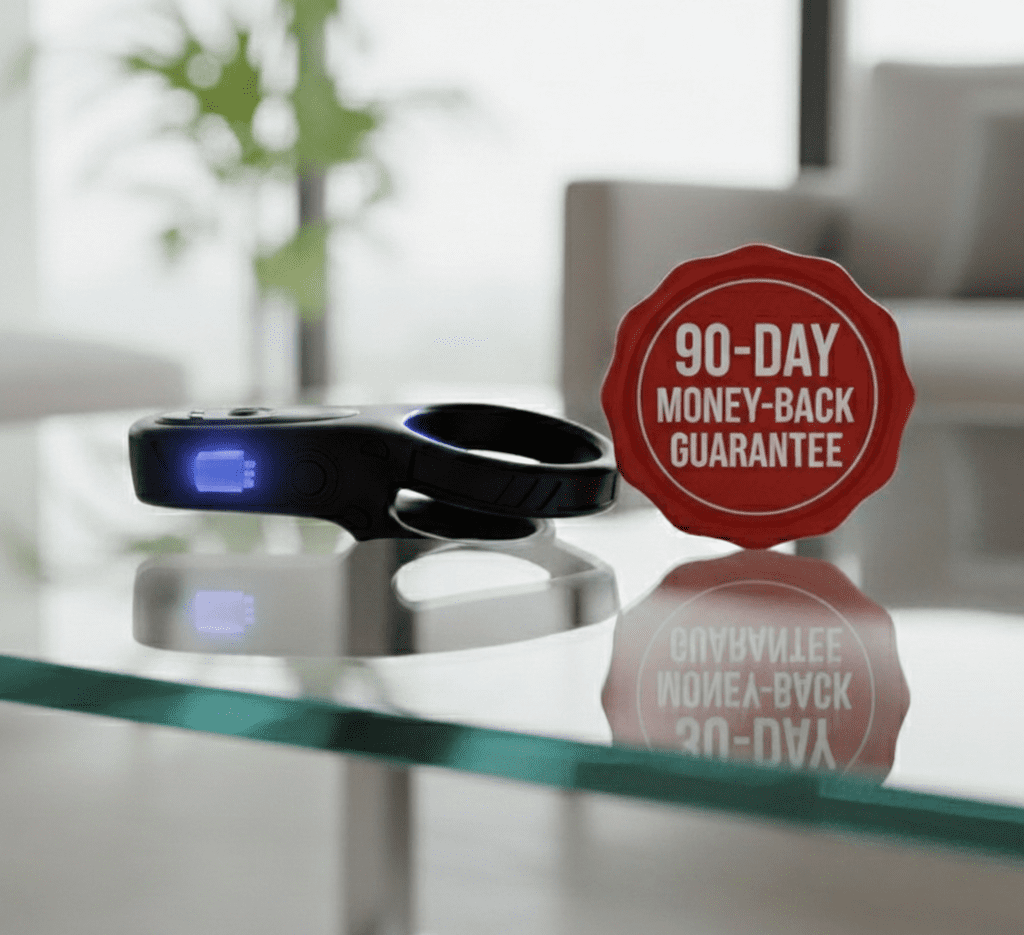
ErectoNeuroX comes with a satisfaction guarantee.
If you don’t notice a real difference after the period of use, you don’t pay.
It’s that simple.
Please note: this technology is not available all the time.
References
(1) https://www.health.harvard.edu/newsletter_article/Testosterone_aging_and_the_mind
(2) https://www.upi.com/Health_News/2012/06/24/Low-testosterone-not-normal-part-of-aging/21971340591160/
(3) https://joe.bioscientifica.com/view/journals/joe/217/3/R25.xml
(4) https://www.ncbi.nlm.nih.gov/pubmed/2202881
(5) https://www.ncbi.nlm.nih.gov/pmc/articles/PMC4154787/
(6) https://www.ncbi.nlm.nih.gov/pubmed/25982085
(7) https://www.ncbi.nlm.nih.gov/pmc/articles/PMC5054608/
(8) https://www.ncbi.nlm.nih.gov/pubmed/22552705
(9) https://www.ncbi.nlm.nih.gov/pmc/articles/PMC5649360/
(10) https://www.betweenusclinic.com/sex-surveys/worst-male-sexual-issue-survey/
(11) https://thriva.co/hub/womens-health/understand/how-your-hormones-affect-your-energy-levels#testosterone
(12) https://www.ncbi.nlm.nih.gov/pmc/articles/PMC4772354/
(13) https://www.webmd.com/men/what-low-testosterone-can-mean-your-health#1
(14) https://www.healthline.com/health/low-testosterone/dangerous#symptoms
(15) https://www.health.harvard.edu/mens-health/is-testosterone-therapy-safe-take-a-breath-before-you-take-the-plunge
(16) https://www.sciencedaily.com/releases/2019/07/190718123258.htm
(17) https://jamanetwork.com/journals/jama/fullarticle/2603929
(18) https://www.ncbi.nlm.nih.gov/pubmed/20592293
(19) https://www.ncbi.nlm.nih.gov/pubmed/11402256
(20) https://www.ncbi.nlm.nih.gov/pubmed/6298507
(21) https://www.ncbi.nlm.nih.gov/pmc/articles/PMC5988228/
(22) https://www.ncbi.nlm.nih.gov/pubmed/8488634
(23) https://www.sciencedirect.com/science/article/abs/pii/0093691X85901827
(24) https://www.denverpost.com/2008/02/01/rodeo-group-tests-bulls-to-prevent-beefing-up-with-steroids/
(25) https://www.ncbi.nlm.nih.gov/pubmed/1906089
(26) https://www.ncbi.nlm.nih.gov/pubmed/3009677
(27) https://www.ncbi.nlm.nih.gov/pubmed/365598
(28) https://www.sciencedirect.com/topics/neuroscience/GnlH-antagonists
(29) https://www.sciencedaily.com/releases/2009/06/090615171618.htm
(30) https://www.meghantelpner.com/blog/soy-foods-hidden-sources-health-and-environmental-impact/
(31) https://news.ncsu.edu/2008/07/new-study-shows-compounds-from-soy-affect-brain-and-reproductive-development/
(32) https://www.ncbi.nlm.nih.gov/pmc/articles/PMC2853991/
(33) https://www.npr.org/2011/03/02/134196209/study-most-plastics-leach-hormone-like-chemicals
(34) https://www.healthcmi.com/Nursing-News-and-Information/276-estrogen-exposure-found-in-store-receipts
(35) https://www.sciencedirect.com/science/article/abs/pii/S030698770600702X
(36) https://link.springer.com/referenceworkentry/10.1007%2F978-3-319-44441-3_32
(37) https://www.ncbi.nlm.nih.gov/pubmed/9758439?dopt=Abstract
(38) https://jamanetwork.com/journals/jama/fullarticle/2603929
(39) https://www.ncbi.nlm.nih.gov/pubmed/17568384
(40) https://www.ncbi.nlm.nih.gov/pmc/articles/PMC3739276/
(41) https://aip.scitation.org/doi/pdf/10.1063/1.4991216
(42) https://www.ncbi.nlm.nih.gov/pubmed/24386995
(43) https://www.webmd.com/vitamins/ai/ingredientmono-1132/eurycoma-longifolia
(44) https://hqlo.biomedcentral.com/articles/10.1186/1477-7525-1-77
(45) https://www.ncbi.nlm.nih.gov/pubmed/21671978/
(46) https://www.ncbi.nlm.nih.gov/pubmed/23754792
(47) https://onlinelibrary.wiley.com/doi/full/10.1111/and.12482
(48) https://www.ncbi.nlm.nih.gov/pubmed/20078516/
(49) https://www.ncbi.nlm.nih.gov/pmc/articles/PMC3902593/
(50) https://www.ncbi.nlm.nih.gov/pmc/articles/PMC3902593/
(51) https://examine.com/supplements/chlorophytum-borivilianum/
(52) https://examine.com/supplements/chlorophytum-borivilianum/
(53) https://ods.od.nih.gov/factsheets/Zinc-HealthProfessional/
(54) https://www.medicalnewstoday.com/articles/5702.php
(55) https://www.ncbi.nlm.nih.gov/pubmed/20446777
(56) https://www.ncbi.nlm.nih.gov/pubmed/596207
(57) https://www.ncbi.nlm.nih.gov/pubmed/21744023
(58) https://www.ncbi.nlm.nih.gov/pubmed/8875519
(59) https://www.ncbi.nlm.nih.gov/pmc/articles/PMC4623306/
(60) https://www.ncbi.nlm.nih.gov/pubmed/1619184
(61) https://www.ncbi.nlm.nih.gov/pubmed/21129941/
(62) https://www.ncbi.nlm.nih.gov/pubmed/28091641
(63) https://www.endocrine-abstracts.org/ea/0028/ea0028p313
(64) https://www.eurekalert.org/pub_releases/2007-07/pw-pw1070207.php
(65) https://www.iasj.net/iasj?func=fulltext&aId=71548
(66) https://www.ncbi.nlm.nih.gov/pmc/articles/PMC3665023/
Comments (3)
I attended a Yale-led seminar earlier this year on neuroregulation and stress-related dysfunction. Binaural and neuromodulation techniques are gaining serious attention in this field. Interesting to see this approach becoming more accessible.
I’ve been researching neurological approaches to erectile dysfunction for a while. Psychological stress plays a much bigger role than most men realise. After consistent use, I noticed a clear improvement in control and response.
I was dealing with anxiety-related performance issues that felt impossible to break. What surprised me was how quickly my nervous system calmed down. Within a few weeks, things felt natural again. Sleep improved too.